Sunday, January 12, 2020

Sinharaja Forest Reserve Sri Lanka

Image result for sinharaja forest reserve

Image result for sinharaja forest reserve

From Wikipedia, the free encyclopedia
Jump to navigationJump to search
Sinharaja Forest Reserve
Sinharaja29.jpg
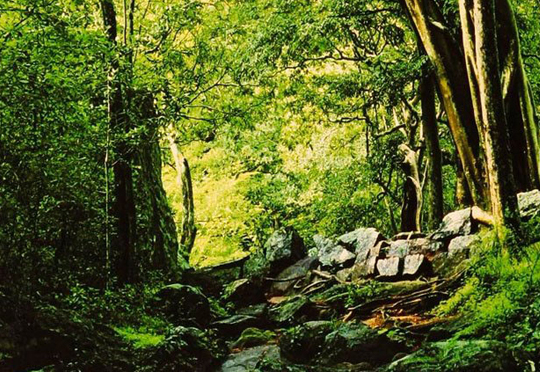
View from the Blue Magpie Lodge
LocationSabaragamuwa and Southern ProvincesSri Lanka
Coordinates6°25′00″N 80°30′00″ECoordinates6°25′00″N 80°30′00″E
Area88.64 km2 (34.22 sq mi)
EstablishedApril, 1978
Governing bodyDepartment of Forest Conservation
CriteriaNatural: ix, x
Reference405
Inscription1988 (12th Session)
Sinharaja Forest Reserve is a forest reserve and a biodiversity hotspot in Sri Lanka. It is of international significance and has been designated a Biosphere Reserve and World Heritage Site by UNESCO.
According to the International Union for Conservation of Nature (IUCN), Sinharaja is the country's last viable area of primary tropical rainforest. More than 60% of the trees are endemic and many of them are considered rare.
The hilly virgin rainforest, part of the Sri Lanka lowland rain forests ecoregion, was saved from the worst of commercial logging by its inaccessibility and was designated a World Biosphere Reserve in 1978 and a World Heritage Site in 1988. The reserve's name translates as Lion Kingdom.
The reserve is only 21 km (13 mi) from east to west, and a maximum of 7 km (4.3 mi) from north to south, but it is a treasure trove of endemic species, including trees, insects, amphibians, reptiles, birds, and mammals.
Because of the dense vegetation, wildlife is not as easily seen as at dry-zone national parks such as Yala. There are about 3 elephants and 15 or so[vague] leopards. The most common larger mammal is the endemic purple-faced langur.
Birds tend to move in mixed feeding flocks, invariably led by the fearless Sri Lanka Crested Drongo and the noisy orange-billed babbler. Of Sri Lanka's 26 endemic birds, the 20 rainforest species all occur here, including the elusive red-faced malkohaGreen-billed coucal, and Sri Lanka blue magpie.
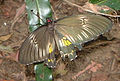
Reptiles include the endemic green pit viper and hump-nosed vipers, and there are a large variety of amphibians, especially tree frogs. Invertebrates include the endemic common birdwing butterfly and leeches.


    Social Integration[edit]

    The reserve is well-integrated with the local population that is living in some dozens of villages dotted along the border. The villages are more in number along the southern border whilst the presence of some large estates along the northern border has resulted in only a few villages there. The locals collect herbal medicine, edible fruits, nuts, mushrooms, other non-timber forest products including bees honey and a sugary sap collected from a local palm species of the genus Caryota. The sap is converted into jaggery, a local brew, and vinegar. Local people walk in the forest to collect the above items when they are not busy with their other agricultural pursuits. In addition, the crystal-clear water coming from dozens of streams is the main water source for all people living around the reserve. For generations, local people trekked through the forest from south to north to make their annual pilgrimage to the Adams Peak.

    Gallery[edit]

    Disclaimer

    The above comments are based on my personal travel experiences to this particular location in the summer months. Your experience may vary due to weather and traffic.
    My trips were not sponsored by any of the authorities and my comments are not biased or representing any views of governing bodies.
    History and information extracted from Wikipedia and photos were selected from Google images and all rights reserved with original owners.
    This is only for an informational purpose. Not for commercial use.

    Note.

    Hope you will enjoy your visit. Please make your comments, suggestions & travel questions. I am happy to provide information on my earliest convenience & update the post accordingly.
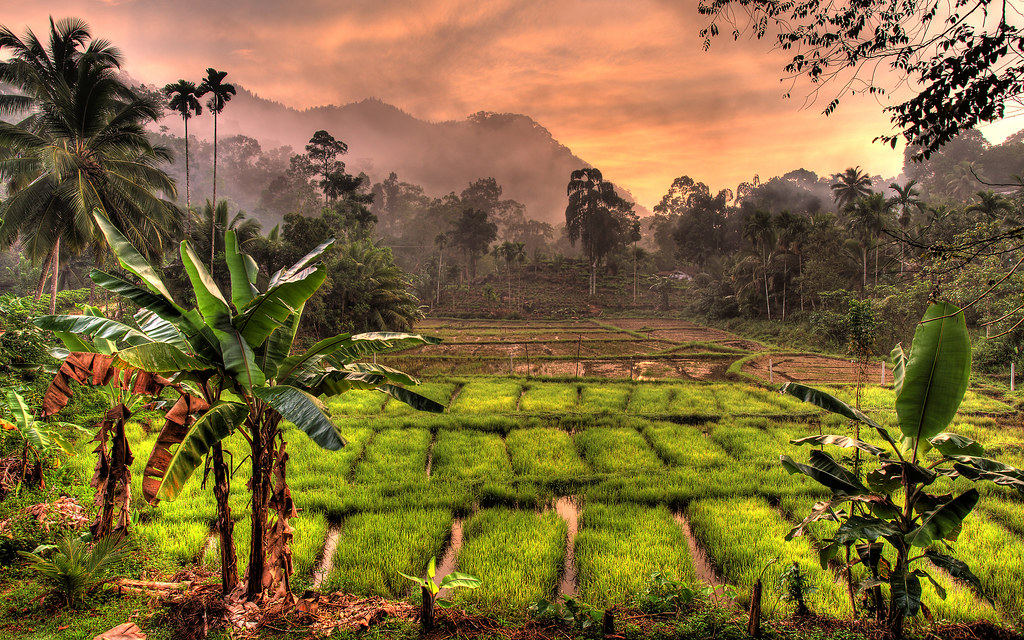
    Image result for sinharaja forest reserve

    Thursday, January 9, 2020

    Trevi Fountain - Rome

    Image result for trevi fountain


    After Some Time……

    Welcome to my blog in this New Year 2020. I had a long break last year for new additions but hope this year I will be able to schedule more items to publish on time.

    First of all, I wish this year will be a full adventure time with your traveling. Scientifically proved that traveling makes people happier than buying or collecting things.

    Last year I was able to travel Further to Europe in summer and I was able to visit some places in Italy, Switzerland, Germany, Netherlands, Belgium & United Kingdom.

    So join with me. I hope the pictures will catch your eye and this information will help you to have better traveling by saving your time & money.

    All of the Landmarks in my blog were personally touched by me. I use Google images for better eye-catching and Wikipedia for up to date information.

    The experience might vary from your view & preference. Weather, Traffic & other uncontrollable reasons might affect your trip as well. So the best thing is to plan ahead, book early and check updates before you go-to destination.

    When you travel in less stress and Less crowded times you will maximize your experience and feel it better.

    Bon Voyage…….

    Image result for trevi fountain

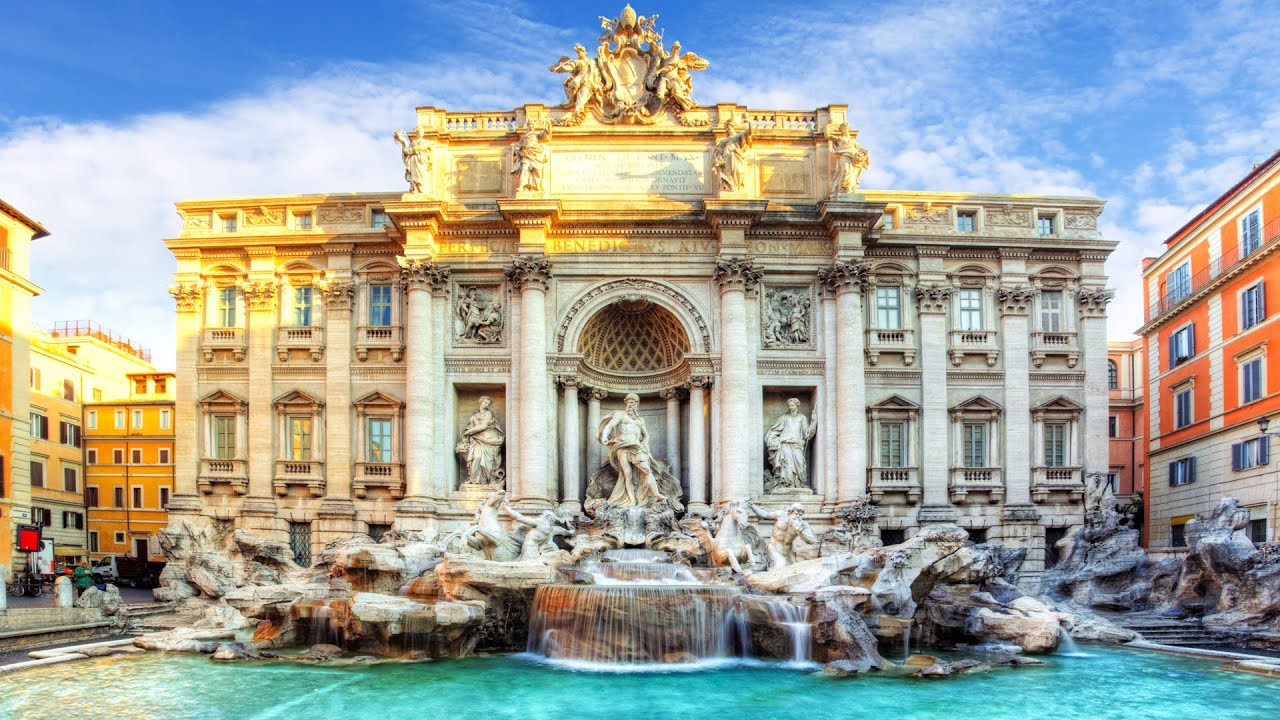
    Trevi Fountain

    From Wikipedia, the free encyclopedia
    Trevi Fountain
    Italian: Fontana di Trevi
    Panorama of Trevi fountain 2015.jpg
    ArtistNicola Salvi
    Year1762
    TypePublic fountain
    MediumStone
    Dimensions26.3 m × 49.15 m (86 ft × 161.3 ft)
    LocationTreviRomeItaly
    41°54′3″N 12°28′59″ECoordinates41°54′3″N 12°28′59″E
    The Trevi Fountain (ItalianFontana di Trevi) is a fountain in the Trevi district in RomeItaly, designed by Italian architect Nicola Salvi and completed by Giuseppe Pannini and several others. Standing 26.3 metres (86 ft) high and 49.15 metres (161.3 ft) wide,[1] it is the largest Baroque fountain in the city and one of the most famous fountains in the world. The fountain has appeared in several notable films, including Roman HolidayFederico Fellini's La Dolce Vita, the eponymous Three Coins in the FountainThe Lizzie McGuire Movie, and Sabrina Goes to Rome.[2]

      History before 1629[edit]

      The fountain at the junction of three roads (tre vie)[3] marks the terminal point[4] of the "modern" Acqua Vergine, the revived Aqua Virgo, one of the aqueducts that supplied water to ancient Rome. In 19 BC, supposedly with the help of a virgin, Roman technicians located a source of pure water some 13 km (8.1 mi) from the city. (This scene is presented on the present fountain's façade.) However, the eventual indirect route of the aqueduct made its length some 22 km (14 mi). This Aqua Virgo led the water into the Baths of Agrippa. It served Rome for more than 400 years.[5]

      Commission, construction, and design[edit]

      In 1629, Pope Urban VIII, finding the earlier fountain insufficiently dramatic, asked Gian Lorenzo Bernini to sketch possible renovations, but the project was abandoned when the pope died. Though Bernini's project was never constructed, there are many Bernini touches in the fountain as it exists today. An early, influential model by Pietro da Cortona, preserved in the Albertina, Vienna, also exists, as do various early 18th century sketches, most unsigned, as well as a project attributed to Nicola Michetti[6] one attributed to Ferdinando Fuga[7] and a French design by Edmé Bouchardon.[5]
      Competitions had become popular during the Baroque era to design buildings, fountains, as well as the Spanish Steps. In 1730, Pope Clement XII organized a contest in which Nicola Salvi initially lost to Alessandro Galilei – but due to the outcry in Rome over a Florentine having won, Salvi was awarded the commission anyway.[8] Work began in 1732.
      Salvi died in 1751 with his work half finished, but he had made sure a barber's unsightly sign would not spoil the ensemble, hiding it behind a sculpted vase,[9] called by Romans the asso di coppe, the "Ace of Cups", because of its resemblance to a Tarot card.[10] Four different sculptors were hired to complete the fountain's decorations: Pietro Bracci (whose statue of Oceanus sits in the central niche), Filippo della Valle, Giovanni Grossi, and Andrea Bergondi.[11] Giuseppe Pannini was hired as architect.[12]
      The Trevi Fountain was finished in 1762 by Pannini, who substituted the present allegories for planned sculptures of Agrippa and Trivia, the Roman virgin.[13] It was officially opened and inaugurated on 22 May by Pope Clement XIII.[14]
      The majority of the piece is made from Travertine stone, quarried near Tivoli, about 35 kilometres (22 miles) east of Rome.[15]

      Restoration[edit]

      The fountain was refurbished once in 1988 to remove discoloration caused by smog,[16] and again in 1998; the stonework was scrubbed and all cracks and other areas of deterioration were repaired by skilled artisans, and the fountain was equipped with recirculating pumps.[17]
      In January 2013, it was announced that the Italian fashion company Fendi would sponsor a 20-month, 2.2-million-euro restoration of the fountain; it was to be the most thorough restoration in the fountain's history.[18]
      Restoration work began in June 2014 and was completed in November 2015. The fountain was reopened with an official ceremony on the evening of 3 November 2015. The restoration included the installation of more than 100 LED lights to improve the nighttime illumination of the fountain.[19][20][21]

      Iconography[edit]

      The backdrop for the fountain is the Palazzo Poli, given a new façade with a giant order of Corinthian pilasters that link the two main stories.[22] Taming of the waters is the theme of the gigantic scheme that tumbles forward, mixing water and rockwork, and filling the small square. Tritons guide Oceanus' shell chariot, taming hippocamps.[23]
      In the centre, a robustly-modelled triumphal arch is superimposed on the palazzo façade. The centre niche or exedra framing Oceanus has free-standing columns for maximal light and shade. In the niches flanking Oceanus, Abundance spills water from her urn and Salubrity holds a cup from which a snake drinks. Above, bas reliefs illustrate the Roman origin of the aqueducts.[24]
      The Tritons and horses provide symmetrical balance, with the maximum contrast in their mood and poses[citation needed] (by 1730, rococo was already in full bloom in France and Germany).

      Coin throwing[edit]

      Coins are purportedly meant to be thrown using the right hand over the left shoulder.[25] This was the theme of 1954's Three Coins in the Fountain and the Academy Award-winning song by that name which introduced the picture.
      An estimated 3,000 euros are thrown into the fountain each day.[26] In 2016, an estimated €1.4 million (US$1.5 million) was thrown into the fountain.[27] The money has been used to subsidize a supermarket for Rome's needy;[26] however, there are regular attempts to steal coins from the fountain, even though it is illegal to do so.[26][28][29]

      Gallery[edit]

      Hints & tips
      • Go early as 6.30 a.m  if you want to have more time for photos since it is less crowded
      • Sunrise & sunset is the popular time for viewing 


      The throwing of coins into the Trevi Fountain in Rome is a popular ritual that tourists from all over the globe just love to take part in. The practice of throwing coins into the Trevi Fountain comes from a couple of legends that explain why so many people are so keen on coin throwing.

      The first is that the throwing of a coin from the right hand over the left shoulder will ensure that you will return to Rome in the future.

      The second legend was the inspiration behind the film " Three Coins in the Trevi Fountain". This legend claims that you should throw three coins into the fountain. The first coin guarantees your return to Rome, the second will ensure a new romance, and the third will ensure marriage.
      Source
      Image result for trevi fountain
      Disclaimer

      The above comments are based on my personal travel experiences to this particular location in the summer months. Your experience may vary due to weather and traffic.
      My trips were not sponsored by any of the authorities and my comments are not biased or representing any views of governing bodies.
      History and information extracted from Wikipedia and photos were selected from Google images and all rights reserved with original owners.
      This is only for an informational purpose. Not for commercial use.

      Note.

      Hope you will enjoy your visit. Please make your comments, suggestions & travel questions. I am happy to provide information on my earliest convenience & update the post accordingly
      Image result for trevi fountain
      Image result for trevi fountain